

GOLDA Gang, we had so much fun at our Influenced screenings this spring that we’re heading back to Quad Cinema this weekend for the NYC premiere of Floaters, the new Jewish summer camp movie starring Jackie Tohn (Esther in Nobody Wants This), Aya Cash (Broadway’s Giant), Sarah Podemski, and Seth Green.
Join us for a GOLDA screening of Floaters this Sunday, July 12, at 7 p.m. Afterward I’ll be moderating a conversation with the film’s director, Rachel Israel (who also directed Influenced), and producer Shai Korman. Get your tickets here—and stay tuned for tomorrow’s episode of GOLDA Girls, featuring Jackie Tohn.


There are still a few spots left at Monday’s Montauk Mahjong and Wednesday’s NYC Mahjong! Both events are open play and designed for anyone comfortable playing without an instructor. Thanks to The Mahjong Line for the beautiful sets, CANN for being our beverage sponsor, and to our friends at Literie Candle, Rowan, Social Goods, Sqween sunscreen, Serve It Up Designs, and the newly launched party supplies line NESSI for donating prizes. See you there!
Check out all of our GOLDA events here, and get in touch at [email protected] to bring our signature GOLDA programming to your community.

There is perhaps no one more important to my generation’s aesthetic than Audrey Gelman. As the founder of the women’s club The Wing, she created the enviably cool millennial pink workspaces and gathering places that signified the era. She’s since launched The Six Bells: a cottagecore fever dream of country-inspired homeware and decor, sold at their store in Brooklyn and The Six Bells Country Inn in the Hudson Valley.
Audrey keenly understands the power of design in telling a story. Her latest project tells a deeply personal one.
It all started when she was designing The Six Bells Inn, looking at hundreds of prints with designer Adam Greco. “He stumbled across one and sent me the Wallach House website, knowing my own family background,” she told me. Audrey is the grandchild of Holocaust survivors.
The Wallach story is remarkable and heartbreaking: German Jewish brothers Julius and Moritz Wallach opened a studio in Munich in 1900 and started making regionally-inspired fashion designs. Their work popularized the dirndl, the Bavarian dress instantly recognizable to anyone who's ever heard the word “Oktoberfest.” (The Wallachs outfitted the whole parade at the 1910 Oktoberfest centennial.)
From there the brothers created the Wallach House for Folk Art and Regional Costume, continuing to influence the style of the day. But I think you can probably guess where this story is going. In 1937 the business was seized by the Nazis (many of whom were customers; Hitler literally had Wallach curtains at his Bavarian mountain retreat). Julius and Morris managed to flee to America, but their brother Max, who had joined them at the company, was murdered at Auschwitz with his wife Melly.
You can read the full story at the Wallach Project, the initiative founded by Moritz and Max’s great-granddaughter and great-grandson to celebrate and preserve the Wallach archive—and the website Audrey Gelman landed on while designing her inn.
“I was surprised that the dirndl, which I'd always thought of as so Germanic and almost Aryan, had been popularized by a Jewish family,” Audrey told me. “I loved learning that a style I associate so strongly with a certain culture also has Jewish roots.”
She got in touch with the family, and soon a collaboration was born. “The prints themselves were extraordinary, and the family story was so meaningful that I wanted to create something new from it,” Audrey explained. “We'd used so many Tyrolean prints and furniture forms at the hotel already, and we wanted to create products with them too; we just never expected to do it with something this meaningful.”
The result is a collection that features three archival Wallach patterns reimagined with a delightfully modern twist: items with names like Zwölfermuster Ruffled Throw Pillow, Tiere im Wald Dog Bed, and The Work Dress in Herzerlmuster (a design inspired by the dirndl).
“The ability to create something joyful when we've all grown up around so much painful memory was special,” Audrey told me.
With this collaboration, the story of the Wallach House gets a new chapter—and the story of Jewish contributions to German design gets showcased for a new audience and a new generation.
I got to check it all out at The Six Bells & The Wallach Project launch party at The Jewish Museum Shop, one of my favorite places and the only outside retailer carrying the collection:
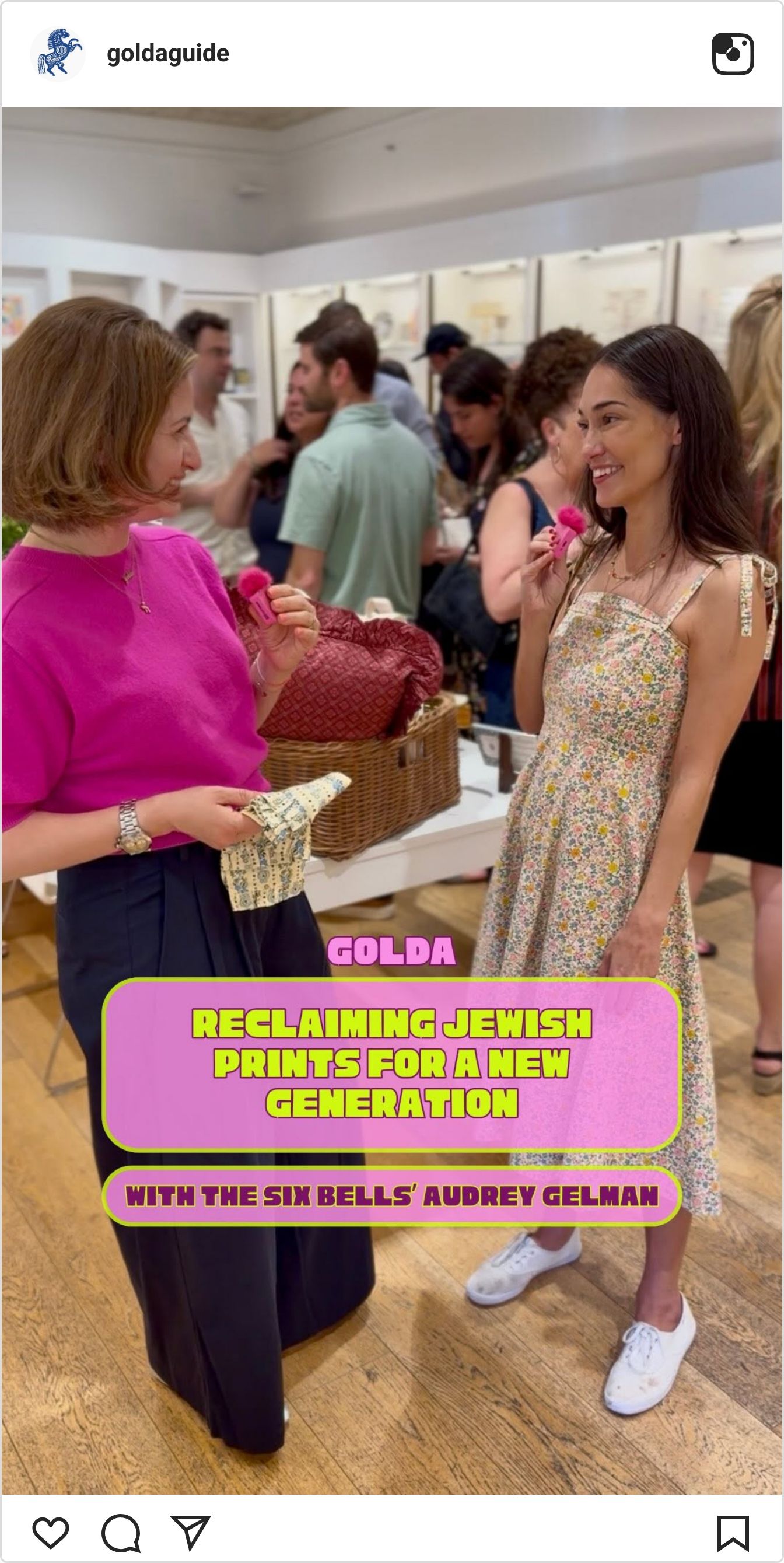
GOLDA’s Picks: The Six Bells & The Wallach Project


Auf wiedersehen—and stay GOLDA,
Stephanie
