

This week I was in Louisville, KY, to speak at a convening of grassroots Jewish organizers and leaders. They came from across the country and represented the varied worlds of education, civic life, the arts, corporate America. Many of these people had been awakened by Oct. 7th, and seen the ripple effects of anti-Israel and anti-Jewish sentiment in the spaces they inhabited. So they took action in the ways they could: by mobilizing, gathering, and speaking up loudly.
I was on the opening panel, where I talked about the importance of material culture (aka the stuff that makes up Jewish rituals and Jewish life), particularly during challenging moments in Jewish history. But thanks to the snowstorm blanketing the Northeast, I ended up getting to stay for the full conference, and I’m glad I did. I got to hear stories of classrooms, yoga studios, and neighborhoods where distressing things are happening—often in direct contradiction of the open-mindedness and universalist values those very spaces championed. As depressing as this was to hear, over and over about different fields, I was deeply inspired by every single one of these people who had stood up to fight it.
They weren’t people who were necessarily loud Jewish voices before, or even people steeped in Jewish knowledge. They were simply Jews who saw something messed up happening around them and knew they had to do something.
It’s a lot like the Purim story.
Queen Esther, who passed as a non-Jew and won the beauty pageant to become King Ahasuerus’s new wife (not enough time to unpack that grossness here!), is told by her uncle Mordechai that she needs to step up and stop the king’s evil advisor Haman and his plot to exterminate the Jews of Persia.
Perhaps Esther was queen for such a time as this, the powerful paraphrased quote goes.
The rest is Jewish holiday history. Esther speaks up, outs herself as a Jew, gets Ahasuerus to stop Haman, and saves the Jews of Persia.
The Louisville gathering, organized by Upstart and Natan, brought all of these modern-day Esthers together, validating and celebrating them for their often thankless, often volunteer labor. It takes a lot to speak up at work, or in your community (I’m sure a lot of you know this firsthand), and it can be an isolating experience. Looking around the room, it felt like the first time in two and a half years that everyone could stop and take a deep breath—together. They could even have some fun.
That’s important, and very Jewish.
Even when times are dark, and perhaps especially so, we’re supposed to remember to take a load off every now and then. Think about what Purim is: a festive holiday that commemorates the foiled attempt to kill all the Jews of Persia. That’s why my daughter has a full week of themed dress-up days coming up at school, and why we’re commanded to drink so much that we can’t tell the difference between Mordechai (good) and Haman (bad!). It’s a raucous celebration of the time we almost were wiped out.
It’s maybe the most Jewish thing ever.
It’s also precisely the kind of bold attitude—and release—we need right now. It’s not surprising, then, that Purim has gained momentum beyond just being a kid-centric “Jewish Halloween.” For the most observant Jews, Purim has always been a night for dressing up, drinking, and turning convention on its head. But in the past few years, it’s also become a hot ticket for the more secular 20s and 30s set. Young people are embracing the revelry of the holiday and building a new kind of Purim party culture that more closely resembles the Tel Aviv club scene than your shul’s Purimspiel.
They tried to kill us, we won, let’s party.
This year alone, there’s a full roster of decidedly not-for-kids events to attend across the country, from the Versailles-themed party at Sixth & I in Washington D.C., to a Moroccan Masquerade in West Hollywood, to PolyEsther, a queer Purim bash in Brooklyn.
Havurah, the Jewish artist collective based in New York City, is throwing a Purim Rave on Saturday night in Bushwick. I love their events (here’s my video from their Hanukkah Market a few months ago), but this one starts at 11 p.m. so I will be living vicariously on Instagram. I called up Eitan Gutenmacher, the co-founder (along with Daniella Messer) and executive director of Havurah, to talk about the inspiration behind the event, and how Purim offers the outlet we need at exactly the moment we need it.
Eitan told me his childhood memories of Purim revelry featured Power Rangers masks and kosher candy. The Havurah rave, he promised, will be decidedly different. Here’s our conversation:

After a long time of being seen as kind of a second-rate Jewish holiday, it feels like Purim is cool. How did that happen?
It’s sort of that “f*ck it” feeling of Purim that everyone is responding to. There is so much evil in our world, and Purim says let’s just have fun in the face of all of it.
I think that there is a huge feeling in the air among Jewish people that we're over the constant seriousness of this moment. We're fighting antisemitism, and that's very real. And a lot of our holidays center around defeating antisemitism historically. But especially during the last two-and-a-half years, everything feels so solemn.
People want to be a little less serious, or not take themselves so seriously…
Yes! There are also all of these Shabbat clubs and other events happening around New York, and I think that this is a part of that same phenomenon. People really are desiring third spaces. They're also desiring Jewish experiences that are subversive and where they can let go a little.

Havurah’s 2025 Purim Rave. Photo courtesy Havurah.
This embrace of Purim debauchery among young adults seems to be a relatively new phenomenon, at least for more secular Jews. But that’s not the case in more religious communities, right?
I grew up Modern Orthodox, and I always understood Purim as a night where you can kind of forget social constraints. I remember in a Gemara class in high school we were talking about cross-dressing, and how you're allowed to cross-dress only on Purim. In my community, gender identity and sexuality were subjects that were kicked under the rug, but on Purim, even something as shocking as that was welcome.
We generally get a pretty mixed crowd in terms of religiosity at Havurah events, and that’s especially true on Purim. It’s a particular opportunity for people from across different Jewish communities to come together, where there are religious men and non-religious women in the same room, dancing on the same dance floor.
What I think is so interesting about what you guys are doing, and also the organizers of similar events across the country, is fusing the tradition of Purim with an edgy, anything-goes vibe that feels very Tel Aviv.
I’m not sure that was our intention, but that makes sense because so much of Havurah is inspired by secular Israeli lifestyle and culture. I spent a gap year at a yeshiva in Israel after high school, and Purim there was super important to me and my classmates. I remember so many Orthodox guys dressing like girls, girls dressing like guys, and people drinking bottles of wine in the street. After the Megillah reading, there was this opportunity to experience Israeli nightlife. I ended up going to this huge Purim rave by Taltalistim, which took place at an arena on the outskirts of Jerusalem. And it was so different from yeshiva. It was very LGBT, very secular. Everyone was in costume but there was nothing religious about it. I was like, “wow, this is a real party.”
Taltalistim ended up really influencing what Havurah would become. I was struck by the production value put into a Jewish event. I realized this is what I want to do in New York on Purim—this is how people should be experiencing the holiday.

Tel Aviv comes to New York City at the 2025 Purim Rave. Photo courtesy Havurah.
There are a lot of different iterations of this new type of Purim party. Why did you decide to make Havurah’s a rave?
Purim feels experimental, like you can be weird and you can be silly and not take yourself so seriously. That's also what I see as beautiful in the current stream of electronic pop music. So it just made sense to us that Purim would be a rave.
Havurah’s Purim Rave is this Saturday night in Brooklyn. Get your tickets here—and tell me all about it!
For more on the holiday’s themes of “chaos and courage,” check out past GOLDA interviewee Bluth’s Purim Guide. I also loved Mijal Bitton’s newsletter this week about how Purim is the holiday of October 8th Jews.
A major mazel tov to Rabbi Diana Fersko, whose wisdom we turn to regularly, on her appointment as the inaugural Chief Jewish Life Officer at the Marlene Meyerson JCC Manhattan. We’re lucky to have her passion and guidance on the Upper West Side.
Wishing you a happy Purim, however you observe it. There’s still time to buy these:
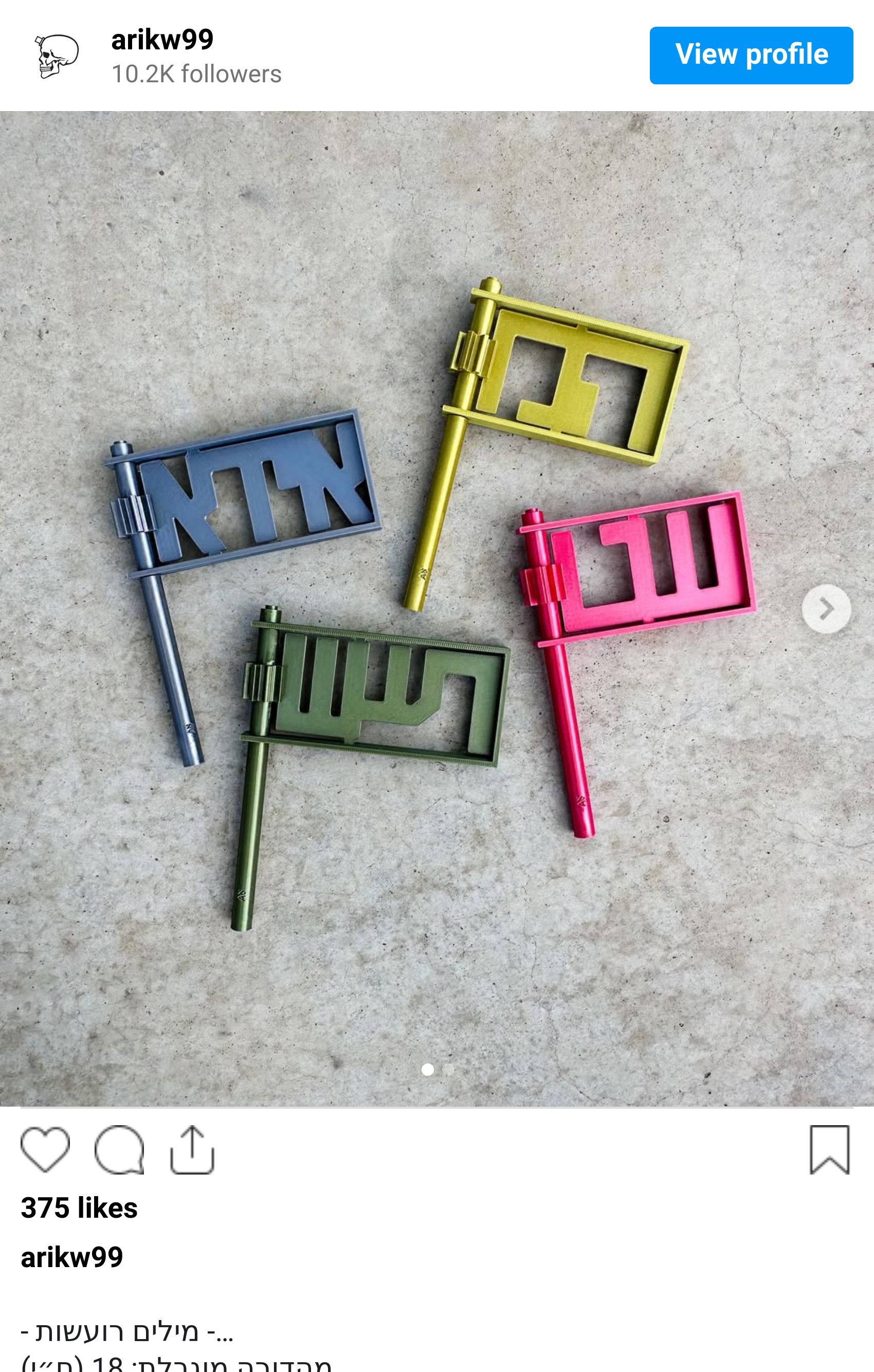
Stay GOLDA,
Stephanie